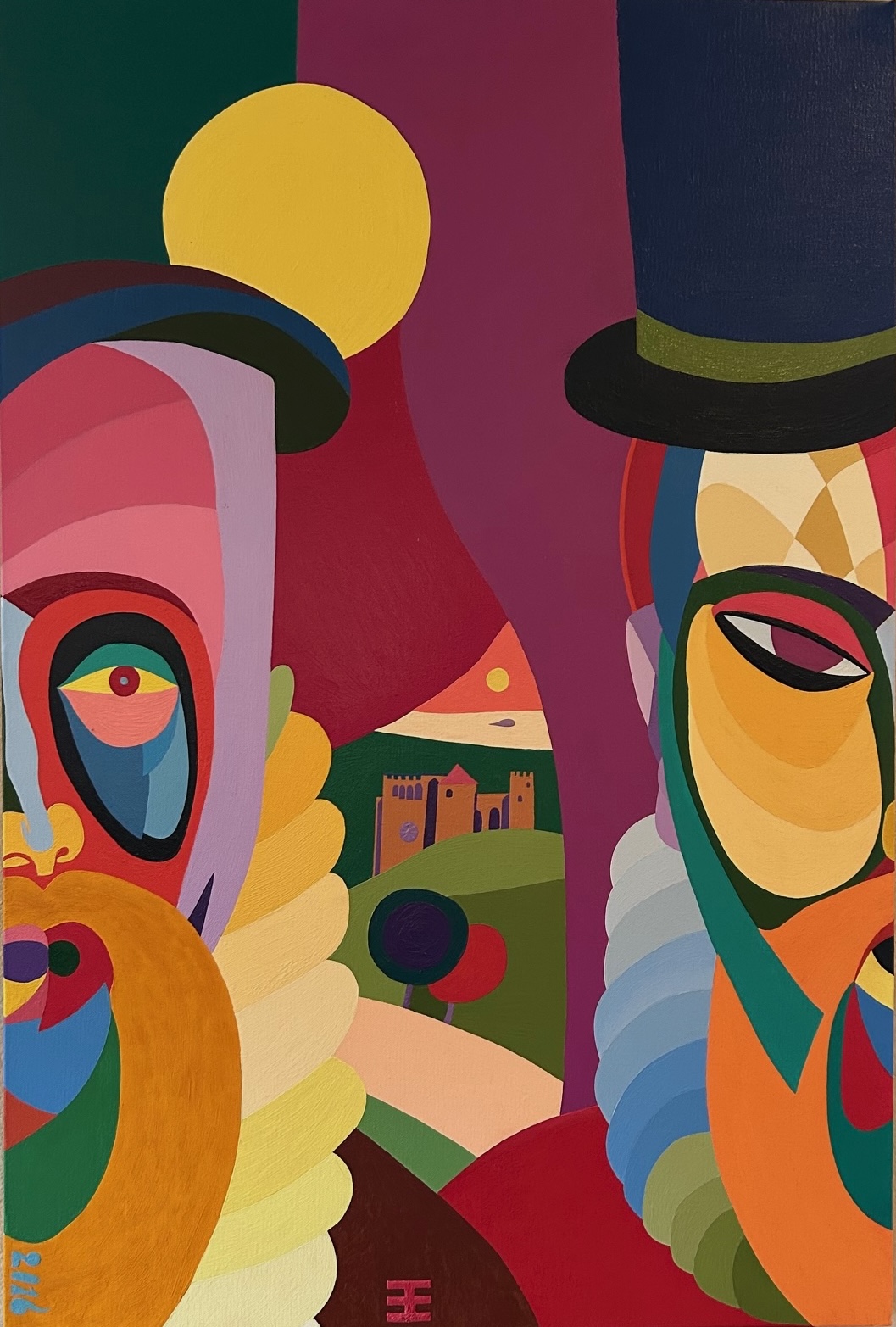
Selected Works
USSR — Under Constraints (Pre-Perestroika)

Boris painted Sakharov while the physicist was still free, and had the canvas carried to his Moscow apartment by Vadim and Zarina, friends from the dissident circle. In January 1980 Sakharov was sent into internal exile in Gorky, held under guard and force-fed through his hunger strikes. This canvas is the second version, painted afterward.
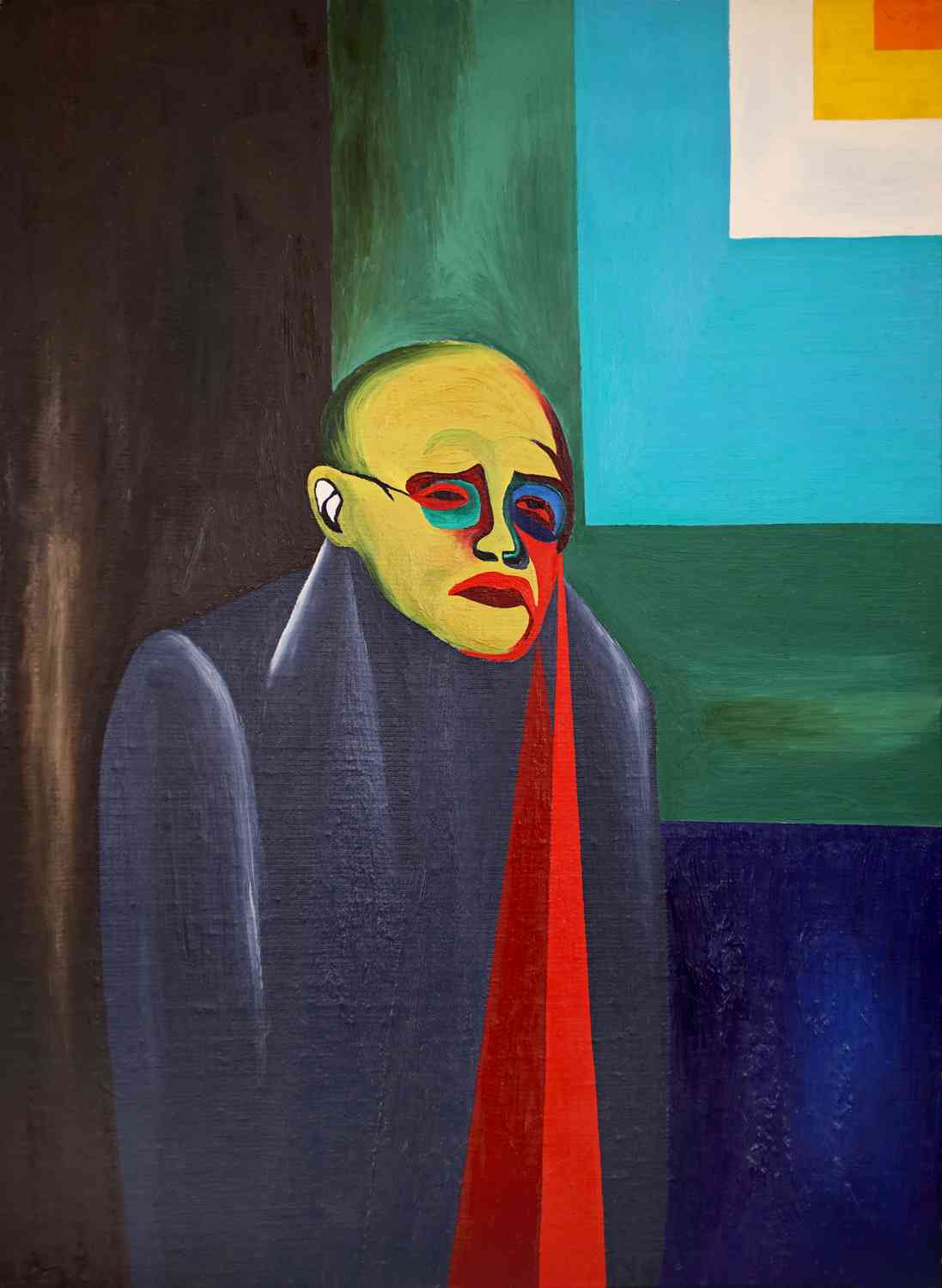
Babel was a Jew from Odessa, as was the painter's father. The NKVD shot him in 1940, and for four decades afterward his name was awkward to say aloud. Painting him in 1979 was not a neutral choice of subject.

Okudzhava's songs played on Soviet television; his mother had been imprisoned in a forced-labor camp, alongside the painter's mother-in-law. The two women knew each other well. This portrait comes out of that proximity, not out of fame.


Perestroika and Early 1990s — Transitional Expansion
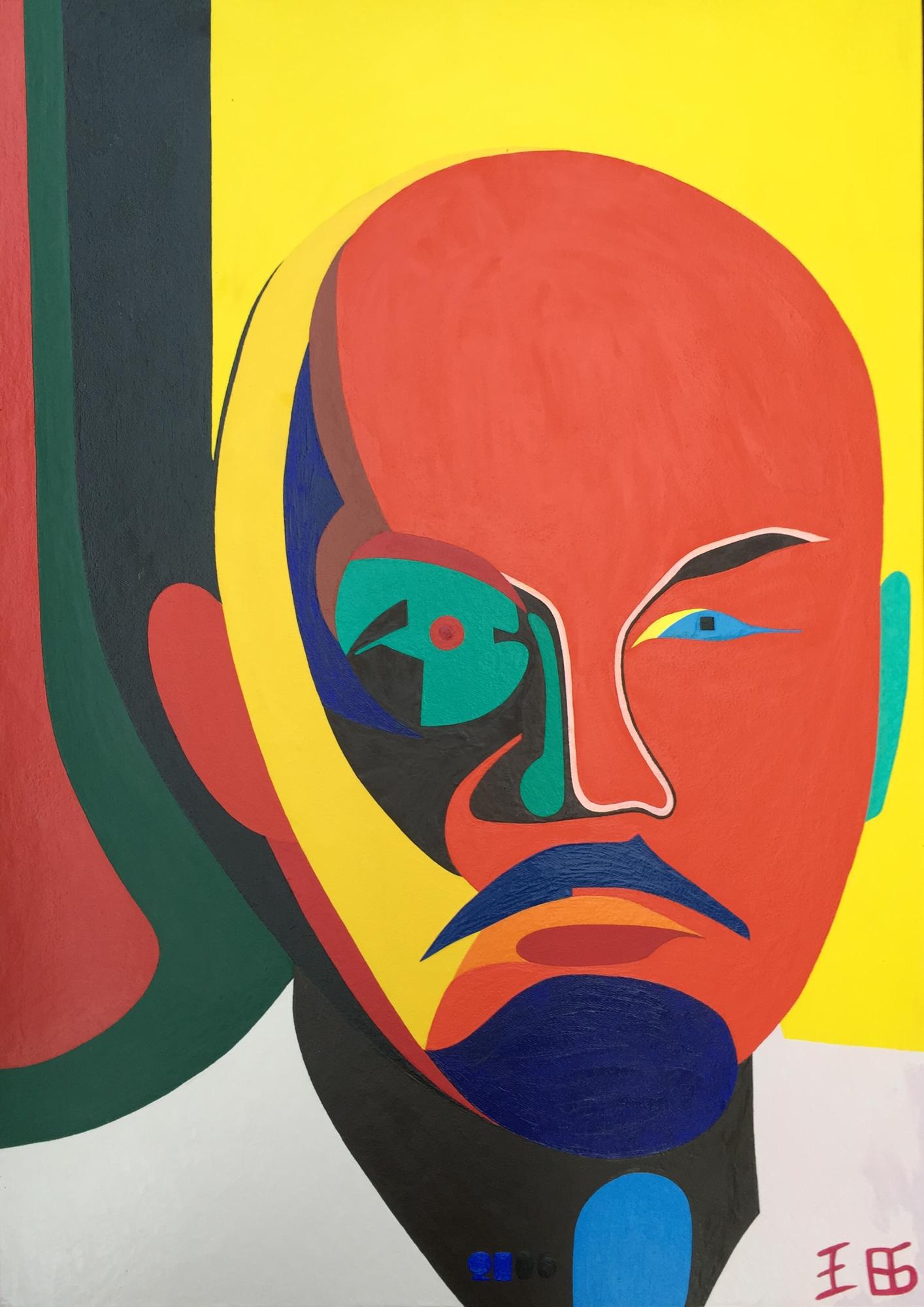
Not homage. Lenin is painted as a propaganda poster and deliberately as a false one — the totalitarian image quoting itself. In 1986 the joke still carried a risk.

The Soviet Union ended that year. The painter looks out cheerfully — a Soviet intellectual out from under the thing that had shaped his entire working life.


Post-Soviet Period — Architectural Synthesis (1992–2010)

Not an imagined city. This is the actual view from the kitchen window of the family's Moscow apartment.

A reworking of Seurat's A Sunday Afternoon on the Island of La Grande Jatte, rebuilt in flat planes and hard color. Boris considers it one of the best paintings he has made.


Late Works — Interior Expansion and Chromatic Clarity (2010–Present)